Why it matters
What Happens If You Ignore These Signs
Here are seven warning signs Vienna homeowners should watch before minor damage turns into a much larger bill. Siding is the first defense against water. Once it stops — even in one small area — moisture usually finds sheathing, then framing.
Cosmetic becomes structural
What starts as a crack or fade can turn into rot and mold in interior walls. It does not happen overnight, which is why early signs are worth acting on.
One panel vs. the whole skin
A single cracked panel is usually a repair. Cracking or warping across several elevations means the material itself is failing.
Repeat calls are a tell
If you are calling for repair more than once every couple of years on the same areas, replacement is often the economical choice.
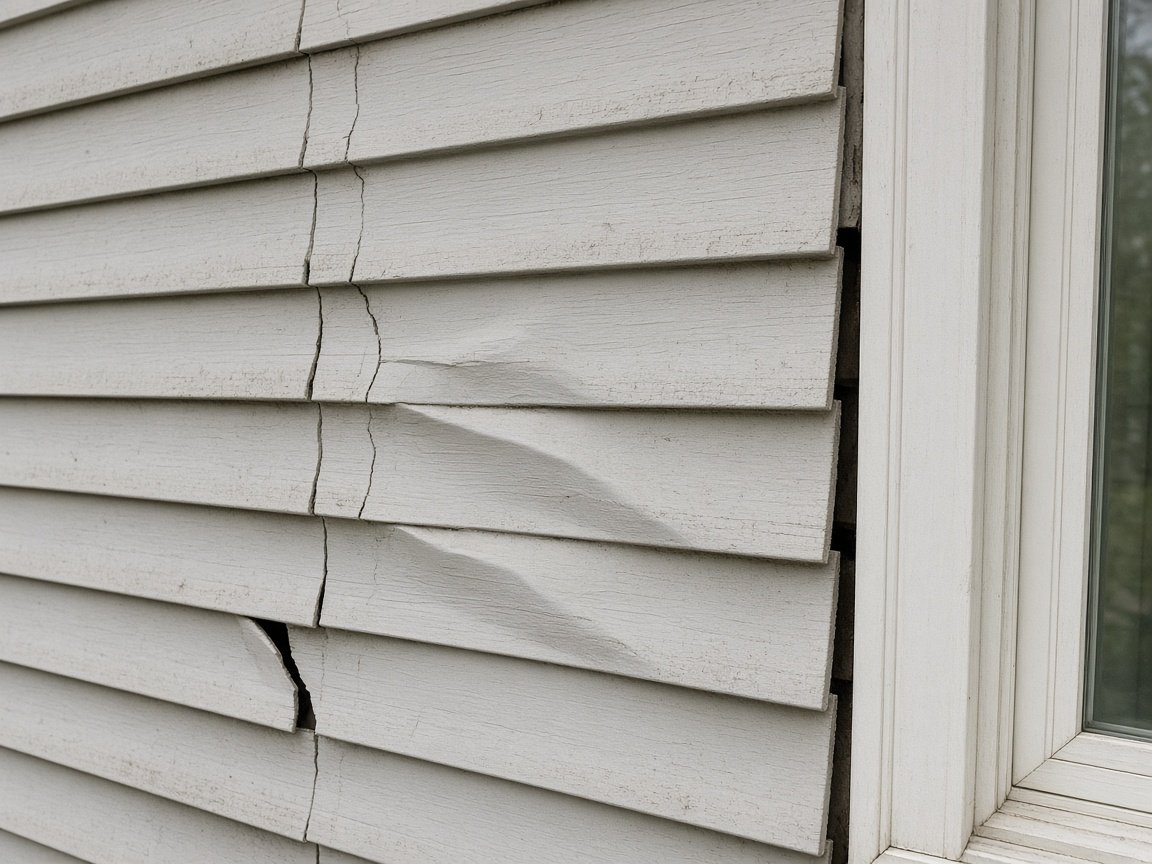
Walk the house
A Quick DIY Inspection
Perimeter
Look for warping, cracking, or gaps at seams. Check corners and window/door trim for soft spots or discoloration.
Roofline
From the ground, look for panels pulling away near the eaves after wind. You do not need a ladder for most of this.
Inside
Peeling paint, bubbling wallpaper, or a musty smell near exterior corners often means moisture already got past the siding.
The seven signs
What to Watch For
One or two signs in a small area usually points to repair. Several signs across elevations, or damage tied to the age of the material, more often points to a full re-side.
Cracks, warp, loose panels
Spread across sections, or panels that blew off after wind, means fastening or the skin is past a cheap patch. Bubbles under vinyl or paint usually mean trapped moisture.
Repair page →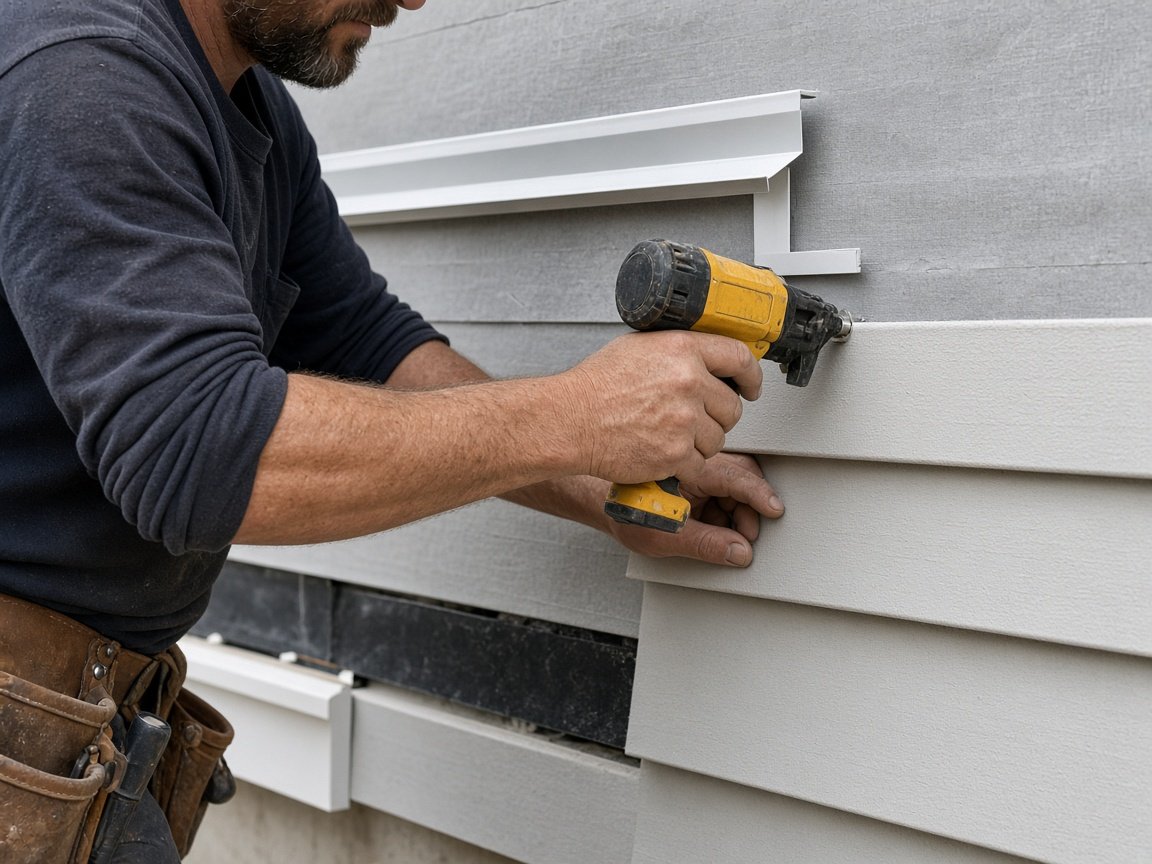
Energy bills & indoor moisture
Climbing heat/cool costs without an obvious cause, plus peeling interior paint, often means gaps behind aging siding and wrap.
Cost guide →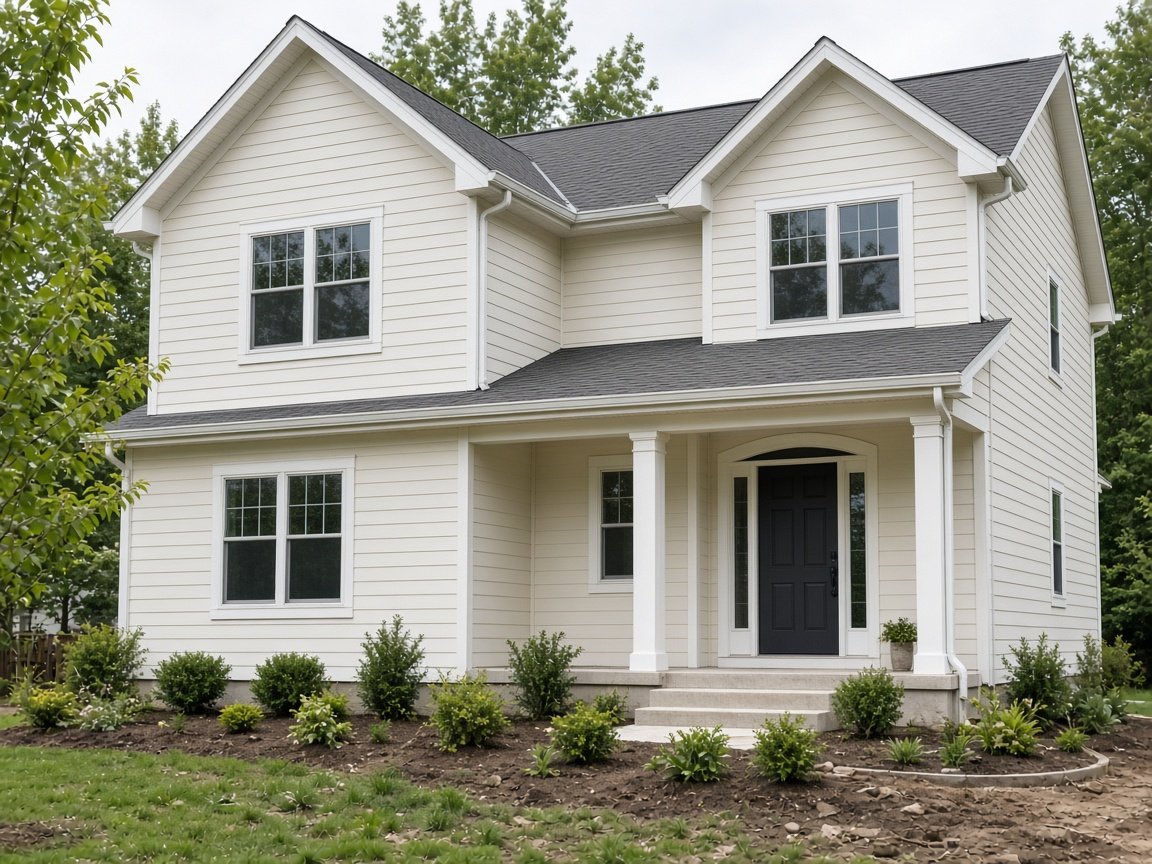
Mold, mildew, repeat repairs
Persistent growth on shaded walls, plus frequent callbacks on the same spots, is usually a replacement conversation — not another patch.
Replacement →