Installation
Fiber Cement Siding Installation
Fiber cement installs follow the manufacturer’s fastener pattern, grade clearances, and joint treatment — details that affect warranty if they’re skipped.
Manufacturer spec
Fastener placement, clearances from grade and roof, and correct joint treatment on every elevation.
The right tools
Carbide blades and dust control. Fiber cement is heavier and more brittle to cut than vinyl.
Same wall prep
Wrap, flash, then hang — the same sequence as our siding installation process.
Profiles
Hardie Board Siding & Textures
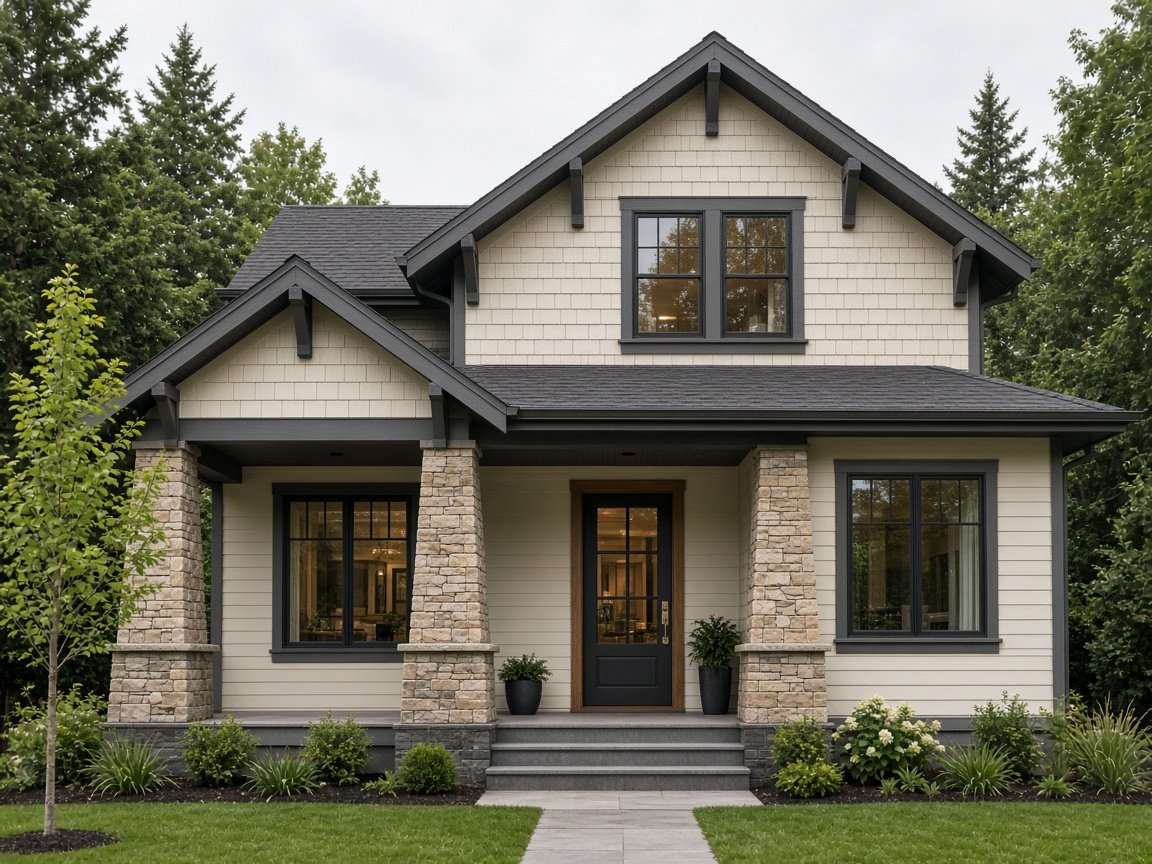
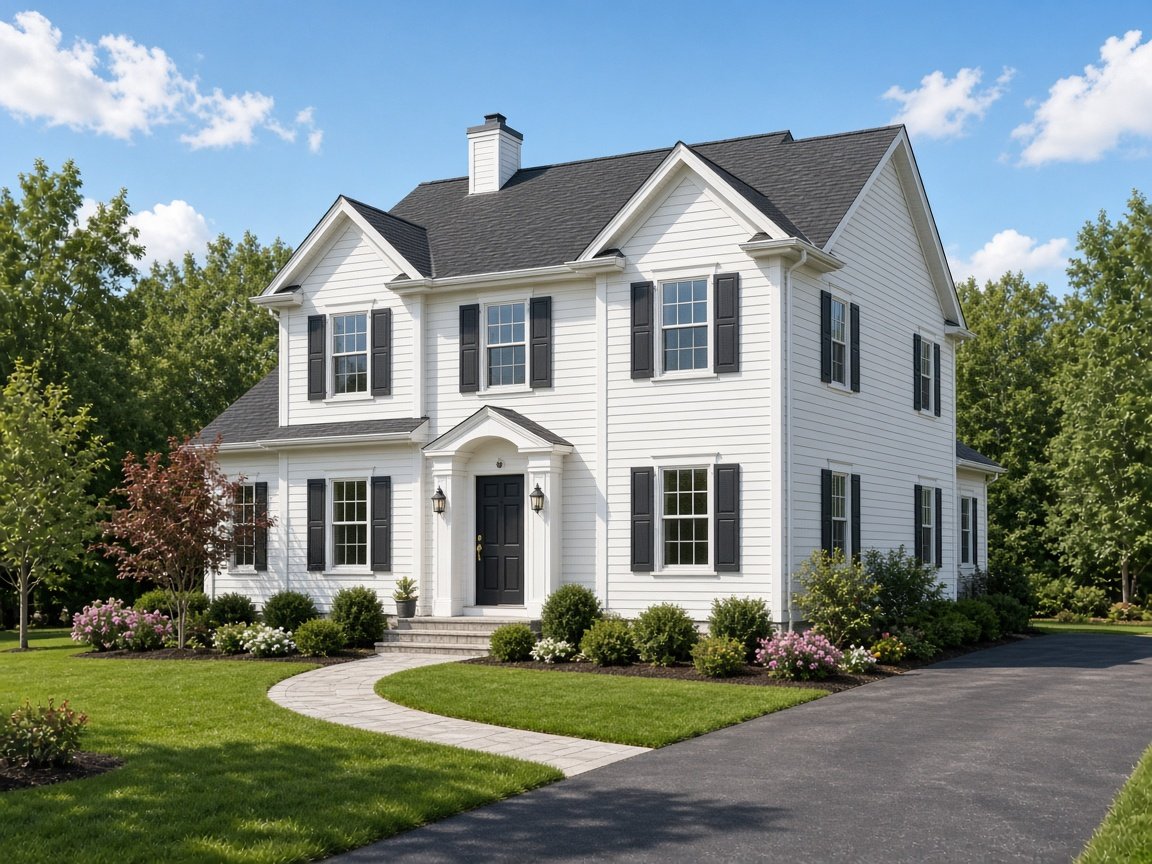
Most of our fiber cement work is James Hardie — lap, shake, and panel profiles for colonials through newer renovations.
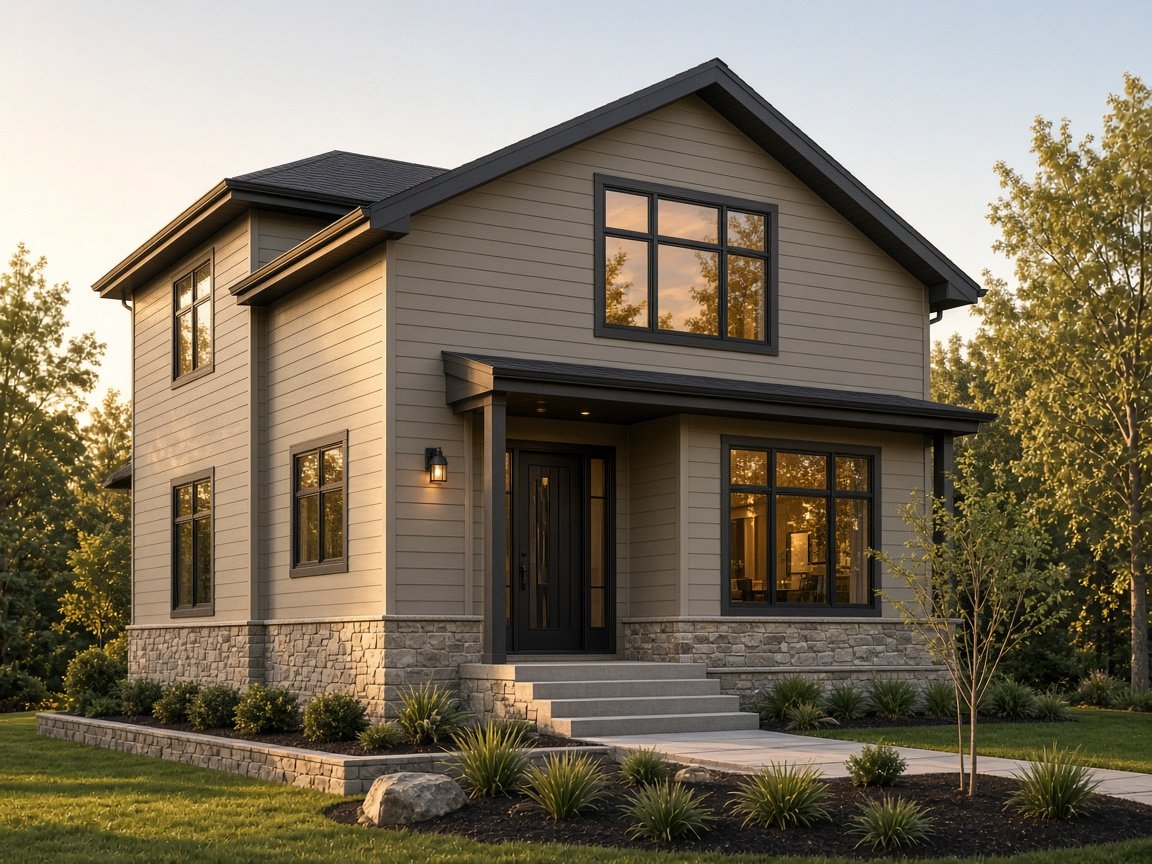
Lap & ColorPlus
Smooth or wood-grain planks with factory ColorPlus that resists fading better than field paint.
Shingle & panel
Shingle gables or large-format vertical panels, with matching trim, soffit, and fascia.
Why it fits this climate
Doesn’t soak like untreated wood or move like vinyl through humid summers and freeze-thaw winters.
Compared
Fiber Cement vs. Other Materials
Costs more than vinyl
And needs occasional repainting — about 10–15 years on factory finish — but it outlasts vinyl on impact.
Won’t rot like wood
The board itself doesn’t warp or rot. Neglected caulk at seams is what lets moisture in later.
30–50 year life
When joints and finish are maintained. See vinyl vs. fiber cement for a side-by-side.
Before you book
Common Questions About Fiber Cement Siding
Compare materials in our vinyl vs. fiber cement guide, or see the cost guide.